
From first software install to international festival stages: a complete roadmap
Every great projection mapping career begins with a single moment of disbelief: the instant when light stops being light and becomes architecture, story, and emotion simultaneously.
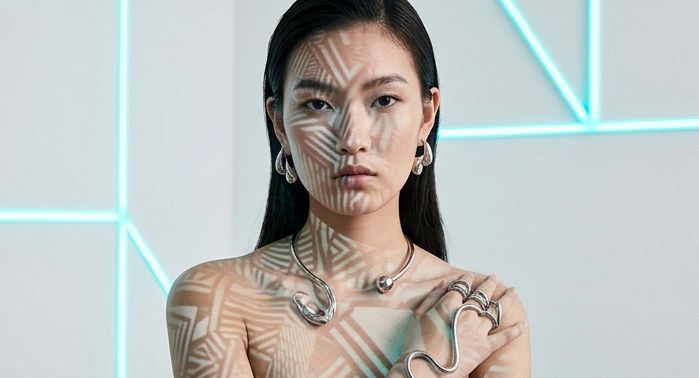
In January 2024, the Sydney Opera House sails dissolved into living coral reefs, cascading waterfalls, and abstract geometric storms as part of Vivid Sydney, the world’s largest festival of light. Millions watched an inert architectural icon breathe. No additional structure was built. No screen was erected. The transformation was achieved entirely through projection mapping: the practice of projecting precisely warped (mathematically transformed to fit complex shapes) video content onto three-dimensional surfaces so that digital imagery conforms exactly to every curve, edge, and recess of the physical world beneath it.
Projection mapping has become one of the most visible and commercially powerful art forms of the twenty-first century, commissioned by governments, luxury brands, theater directors, and museum curators alike. For artists willing to master both aesthetic and technical dimensions, it offers a genuinely viable path to an international career. This article maintains a simple thesis: world-class status in projection mapping requires a strong artistic vision, deliberately developed technical skills, and a thoughtful approach to building visibility. None of these three elements alone is sufficient; together, they are unstoppable. This guide examines each in sequence.
What Is Projection Mapping and Why It Matters
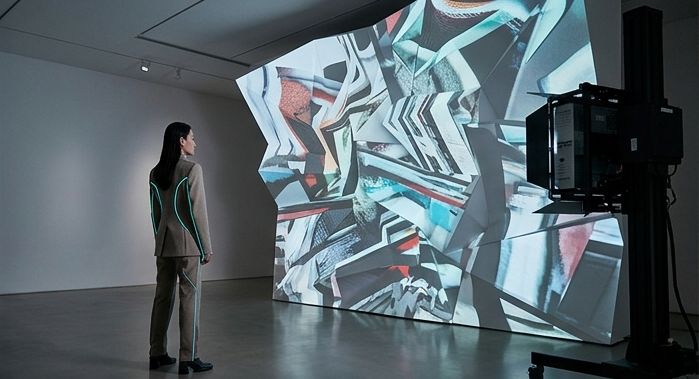
At its technical core, projection mapping uses specialized software to warp (digitally alter the shape of) and mask (hide or reveal certain parts of) video output. The projected image accounts for the geometry (the shape and features) of whatever surface receives it. A building’s columns (vertical supports), recesses (indented areas), and roofline (outline of the roof at the top of the building) become part of the composition rather than obstacles to it. Unlike conventional video projection, which requires a flat rectangular screen, or conventional lighting design, which works with fixed color and intensity, projection mapping treats the entire physical environment as a dynamic canvas.
The practical advantages over alternatives are significant. A projection-mapped facade can be completely transformed in minutes and returned to its original appearance just as quickly, making it ideal for temporary events without permanently altering the architecture. The scale possibilities are virtually unlimited: the same software that maps (digitally aligns visuals to surfaces) a sculpture in a gallery can, with larger projectors and more careful geometric calculation, cover an entire stadium facade. These qualities have driven adoption across festival programming, theatrical set design, museum permanent collections, architectural visualization, and high-budget corporate events. The Cirque du Soleil productions that integrate projection mapping into live performance demonstrate how the technology functions not as spectacle layered on top of art but as a structural element of the artistic experience itself.
Core Skills You Must Develop
The artists who reach the top of this field share a characteristic that is easy to overlook. In a discipline so dominated by technical discussion, they are exceptional storytellers. Projection mapping is a medium for narrative and emotion as much as for technical virtuosity. Developing a strong sense of visual composition, understanding how color creates psychological response, and building the ability to structure an experience with a clear arc from opening to climax are skills that no software tutorial can provide. These come from studying painting, cinema, choreography, and architecture. They also come from producing work that fails and asking honestly why.
On the technical side, the irreducible foundations are motion design, 3D modeling, and real-time software. Motion design provides the vocabulary for how imagery moves and transforms; 3D modeling allows artists to build virtual (digital) representations of projection surfaces and pre-visualize (view and adjust work before it is actually projected) work before setup day; real-time software bridges the gap between pre-rendered content (videos created ahead of time) and live performance (visuals generated or adjusted during the event). A working knowledge of basic programming – whether through Python (a beginner-friendly coding language), GLSL shaders (custom scripts that define how graphics are rendered), or visual scripting environments (systems where users connect blocks visually instead of writing code) – separates artists who can realize any idea from those constrained by existing tool presets.
Soft skills are underestimated consistently by students and overweighted consistently by employers and commissioning organizations. Large-scale projection mapping is never a solo endeavor. The ability to communicate a creative vision to a structural engineer, troubleshoot a media server failure in front of a live audience of ten thousand people without visible panic, and manage a production timeline with multiple contractors and a fixed event deadline are competencies that will determine a career’s durability. These skills decide whether a talented artist builds a lasting reputation or remains perpetually one technical crisis away from professional damage.
Essential Tools, From Beginner to Pro
The software landscape for projection mapping is wide. Choosing tools appropriate to one’s level is a practical necessity, not a compromise. Beginners benefit from starting with HeavyM or the open-source MapMap. Both offer accessible interfaces that enable basic geometric masking (restricting projection to certain shapes) and content projection within hours of first use. At an intermediate level, MadMapper and Resolume Arena provide multi-output handling (controlling several projectors), layer compositing (combining video layers), and performance triggering (launching visuals in real time). These are all essential for live events. For professional work, TouchDesigner is the tool most working professionals recommend. Its node-based visual programming environment (a system where users connect building blocks to create effects) enables genuinely custom systems that differ from anything available off the shelf. Disguise dominates the touring concert and large theatrical sector. Notch has become the preferred real-time rendering environment (software that creates visuals instantly as the project runs) for artists seeking GPU-accelerated (faster, graphics-processor based) generative content (visuals created by rules or algorithms) without writing C++.
On the hardware side, a second-hand consumer projector is a good starting point for learning geometric masking (projecting simple shapes onto small objects). As you move toward professional practice, you’ll work with installations using laser projectors from manufacturers like Barco or Christie Digital. These projectors offer the brightness, color accuracy, and lens flexibility needed for architectural scale. Instead of buying expensive hardware early on, rent equipment from local AV (audio-visual) suppliers. Build relationships with rental companies by volunteering on productions. This is the financially intelligent path most working artists actually took.
Step-by-Step Learning Roadmap
Phase 1: Months 0 to 6
Focus entirely on fundamentals. Choose and install a beginner software tool. Map content onto everyday objects: boxes, bottles, cardboard architectural models. The goal is to build spatial intuition for how projected imagery relates to geometry. At the same time, work through basic motion design tutorials using Adobe After Effects or similar tools. The projection-mapping community on YouTube and the Derivative TouchDesigner forums are the most useful free resources.
Phase 2: Months 6 to 18
Graduate to complex surfaces and multi-projector setups. Learn edge blending – the technique that blends outputs from several projectors into a single seamless image. Start as a technical volunteer at live events, then become a contributor. Apply to open calls from regional light festivals; these deadlines accelerate learning. At this stage, most practitioners transition from MadMapper or Resolume (projection mapping tools) to TouchDesigner (advanced visual programming software).
Phase 3: Month 18 Onward
Develop interactive and generative work. Real-time sensor data (live input from devices that detect motion or light), audience interaction through cameras or smartphones, and AI-generated visual content are the territories where the most commercially interesting and critically noticed work is currently being made. Pursue residency programs at institutions like Stereolux in Nantes or apply to competitive international programs to gain access to large-scale hardware and curatorial support.
Building a Strong Portfolio and Personal Brand
In projection mapping, documentation is not secondary to the work; it is a part of it. A spectacular installation that exists only in memory is professionally invisible. Every project must be filmed with a quality camera on a tripod. Ideally, document multiple stages of production and edit the footage into a short reel that communicates the experience to laptop viewers. The Belgian artist Joanie Lemercier built much of his early international reputation through Vimeo uploads of his installations. His videos circulated widely before social media algorithms made organic reach the norm. The lesson holds: a single well-documented piece that genuinely surprises viewers will travel further than ten mediocre ones.
Vimeo remains the standard platform for video portfolio work in the creative technology sector. Behance is valuable for presenting process documentation and conceptual development. Instagram’s short video formats suit work with strong visual hooks in the first two seconds. A personal website with a clear artist statement and a curated selection of projects completes the picture. Develop a recognizable visual style and preoccupations that make your work identifiable without a name credit. This is what transforms a competent technician into an artist that commissioning organizations actively seek.
Case in Point
The French studio 1024 Architecture built its international profile through a consistent aesthetic of dense geometric systems combined with electronic music culture, presenting work at festivals across three continents before being commissioned for permanent and semi-permanent installations by cultural institutions. Their brand coherence made them memorable in a crowded field.
Career Path and Monetization
The career landscape for projection mapping artists is broader than it appears from the outside. Freelance work for live events and brand activations provides the highest short-term income and the fastest accumulation of production experience. Theatrical and opera companies offer more sustained creative relationships, but typically at lower rates. Festivals like Fête des Lumières in Lyon or Signal Festival in Prague commission work through open calls that are accessible to artists without established industry relationships, making them the most important entry points for newcomers seeking international visibility. Permanent museum and public art installations offer the most prestigious commissions and the most complex production requirements.
Getting the first paid commissions typically requires showing initiative: approaching local festivals and cultural events with a proposal rather than waiting to be discovered, offering to produce a small-scale installation for a venue in exchange for production credits and documentation rights, or collaborating with musicians and theater makers who need visual environments for existing projects. Competition participation at iMapp Bucharest or similar international events provides both visibility and a structured production challenge. Pricing should account for concept development, content production time, technical setup and rehearsal, and equipment costs, and should never be set below what sustains a viable practice.
Artist to Watch
The collective AntiVJ, whose members have gone on to individual international careers, began by producing work for underground electronic music events before transitioning to institutional commissions. Their trajectory from club visuals to Ars Electronica to permanent installations is a practical template for how a career in this field actually develops.
Common Mistakes and Final Advice
The most common mistake beginners make is prioritizing software complexity over conceptual clarity. A visually compelling idea executed simply will always outperform a technically impressive demonstration that means nothing. The second most common mistake is neglecting documentation, for reasons covered above. The third is attempting large-scale public work before developing reliable technical troubleshooting skills: a live installation failure in front of an audience is an experience that teaches quickly but can cost reputationally if it happens before a practitioner has the experience to recover gracefully.
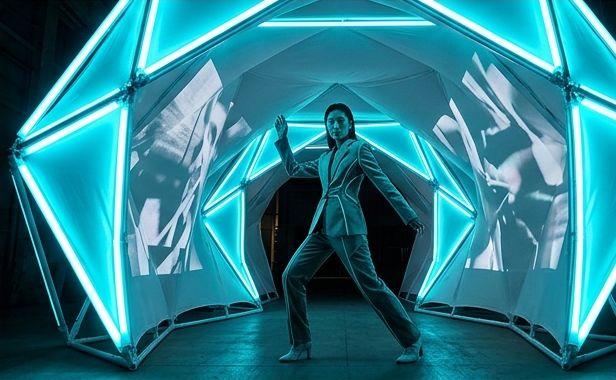
The deeper advice is about patience with the learning curve and honesty about where one’s skills actually are at any given moment. The artists who have built world-class careers in projection mapping, from Joanie Lemercier to the teams behind teamLab, did not reach their current level through any shortcuts. They produced a large volume of work, most of which is not on their public portfolios, failed in low-stakes contexts, and refined both their technical and artistic practice iteratively over the years.
The technology will keep changing. The projectors will get brighter, and the software will get smarter. What will not change is the requirement for a genuine artistic vision to drive it all. Start building yours today.
Open a free trial of TouchDesigner, find a cardboard box, point a projector at it, and make something. The first step toward a world-class career in projection mapping is indistinguishable from the first step toward any other kind of artistic practice: you begin, and then you do not stop.
There are events, there are ideas behind this article – but content is always the game-changer. That’s why we invite you to visit our website, where you’ll find a treasure trove of creative concepts for projection shows across formats, styles, and adaptive scenarios. Let your next event start with inspiration.